
All experiences Poshmark
Amazon leather repair is on its way!
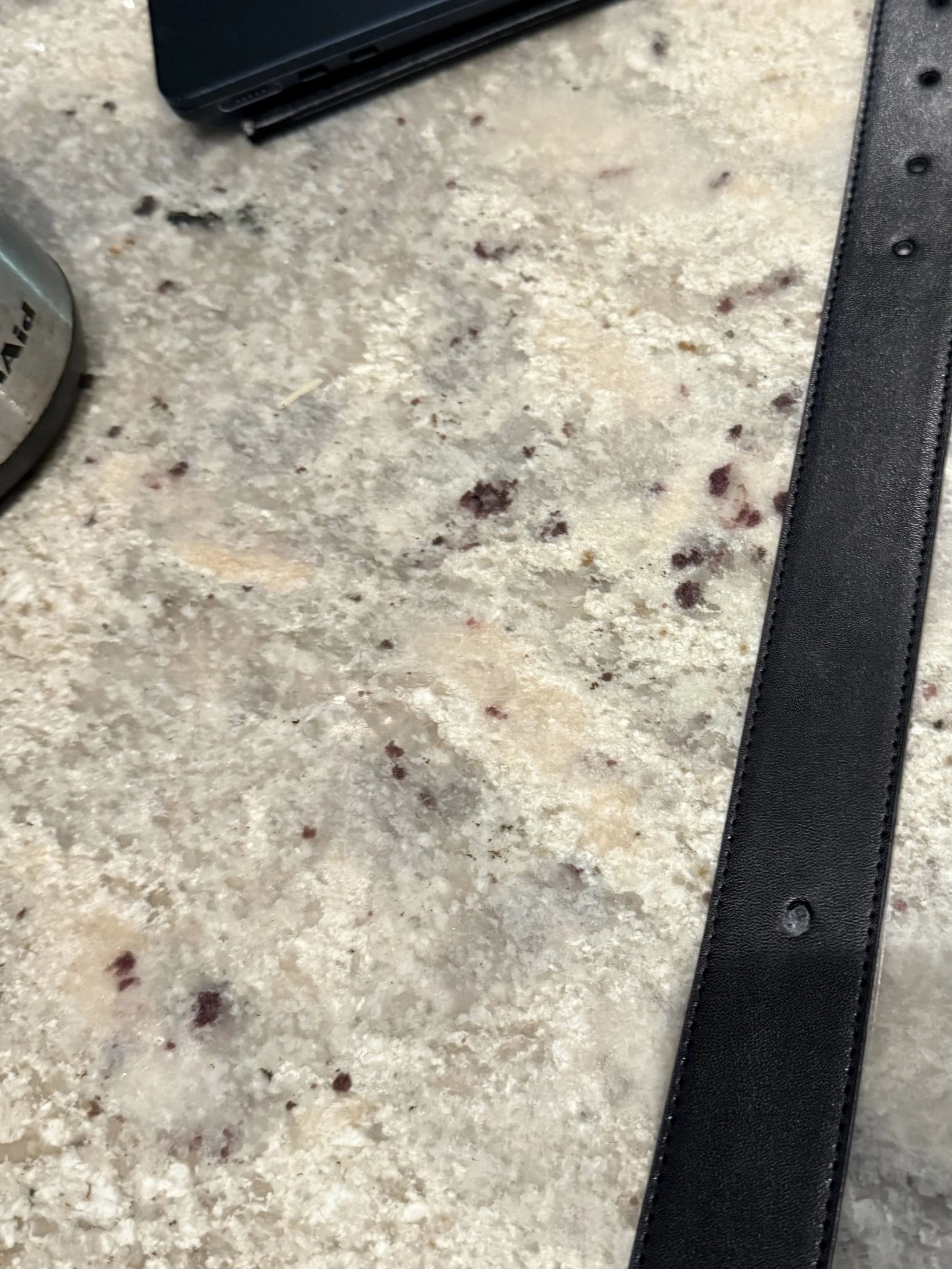
What happens when you finally find the item you’ve been searching for on an online resale site—only to feel disappointed when it arrives? After a recent experience of scoring a belt we’d been dying for, only to receive it with a random hole punched through the beautiful leather, we put together a guide to help you navigate online resale platforms a little more carefully.
How to Avoid Buying Damaged Items Online
1. Read the Description Carefully
Sellers often note flaws in the text.
Look for words like “used,” “blemish,” “tear,” “stain,” “imperfection,” etc.
2. Zoom in on All Photos
Don’t just glance — really zoom.
Some flaws are only visible when zoomed in close or at certain angles. Sellers sometimes hide damage in less obvious shots.
3. Check the Last Few Photos First
Many savvy sellers put photos of flaws at the end. Scroll through all pics — not just the first few.
4. Ask for More Pictures
If something isn’t clear, just ask!
Request photos of specific areas (belt holes, seams, logos, soles, lining, etc.)
5. Read Seller Feedback
Look at the seller’s reviews:
Do people mention mis-described items?
Quick responses? Good communication is a plus.
6. Understand the Return/Dispute Policy
Before buying:
Know how returns work
How long do you have to open a dispute
What kind of proof will you need (photos, timestamps, etc)
7. Compare Similar Listings
If something looks too good to be true, compare it to other listings of the same item.
Price way lower than usual? Might be a reason.
8. Use the Platform’s Protection
Apps like Poshmark, eBay, Mercari, Depop, etc., have buyer protection — but it only applies if you follow rules (evidence, timelines, etc.). Read them!
9. Look at Measurements and Specs
For clothes and accessories, verify sizing and measurements instead of assuming they fit or match the stock photo.
10. Trust Your Gut
Quick ChecklistIf something feels off — funky wording, low-res pics, blurry images — it’s okay to skip it.
